
19thC French Bronze Mathieu de Dombasle Bust Trophy. Luneville Agricultural Fair

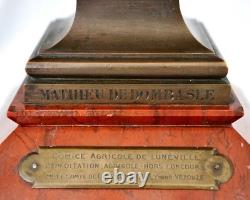


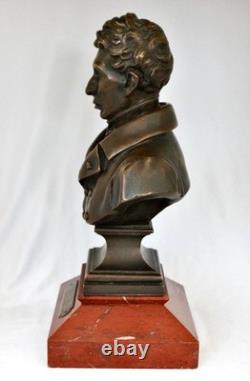
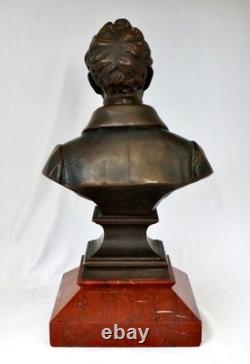
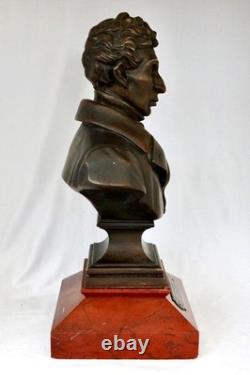




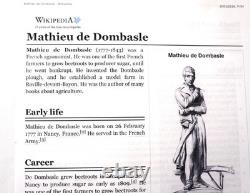
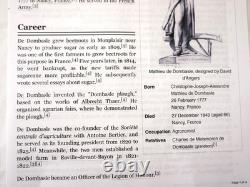

Imposing & highly decorative bronze bust of French agronomist & inventor, Mathieu De Dombasle on a Pyrenean red marble base which has been presented as an agricultural trophy prize probably between 1880 & 1900. NOTE: The bust is made from solid bronze, not hollow, & together with the attached marble base, weighs well over 5 kg. The base of the bust is engraved. The presentation plaque attached to the red marble base has been engraved.
EXPLOITATION AGRICOLE - HORS CONCOURS. MR LE COMPTE DE GUICHEN A CIREY - SUR - VEZOUZE. NON - FARM AGRICULTURAL COMPETITION.
MR COUNT OF GUICHON AT CIREY- SUR- VEZOUZE. NOTE: Although the presentation plaque does not include a date, I have researched other similar French agricultural trophies featuring bronze busts of Mathieu De Dombasle and they were awarded between 1884 & 1902 so it is likely this trophy was presented around the same time period.Included with the bust is a printout of the Wikipedia page relating to Mathieu de Dombasle. Dimensions of Base: 155 mm x 145 mm. Mathieu de Dombasle (1777 - 1843): A French agronomist and one of the first French farmers to grow beetroots to produce sugar. He also invented the Dombasle Plough and established a model farm in Roville-devant-Bayon.
He was the author of many books about agriculture. De Dombasle was the co-founder of the Societe Centrale D'agriculture and he served as its founding president from 1820 to 1825. Luneville: This is the town where the agricultural fair was held. It is a commune in the north eastern French department of Meurthe-et-Moselle. In 2023 the population was 18,262. Cirey-sur-Vezouze: This is the town/village from where the trophy winner came from. It is located just 25 miles east of Luneville. A commune in the north eastern French department of Meurthe-et-Moselle. In 2023 the population was 1,555. Summary: As can be seen from the photos this is a highly decorative 19th Century French agricultural trophy with an interesting story behind it. It has a great Country House look to it.