
Antique Victorian Cruet Set James Deakin & Sons Sheffield, Read The Description
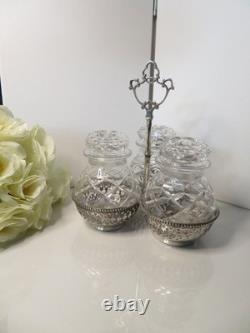
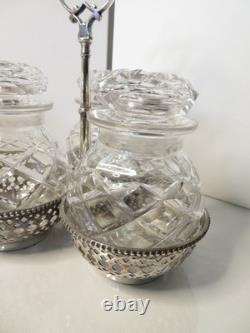
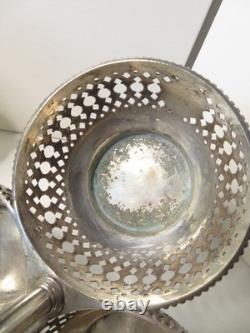
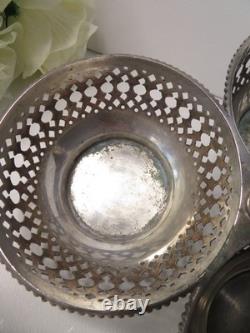
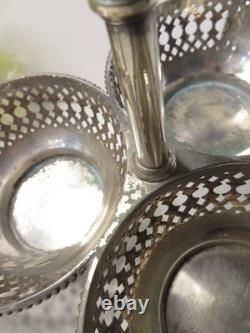
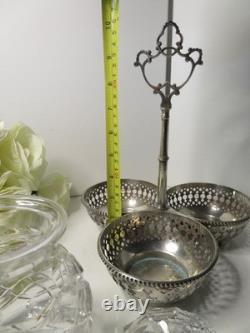
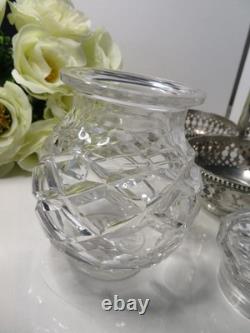
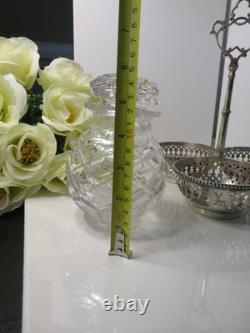
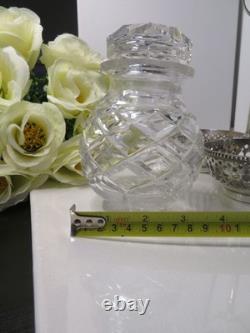
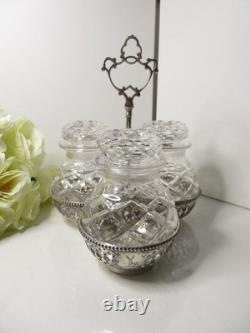
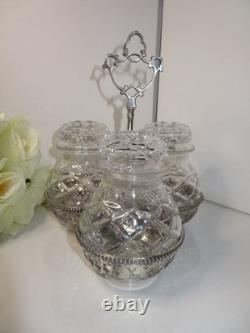

Antique Victorian Cruet Set James Deakin & Sons Sheffield Stag Crest Silverplate. Rare Antique Victorian 3-Jar Cut Glass Cruet Set with Stag Crest. Manufactured by James Deakin & Sons (Sheffield, England). Estimated Period: 1886 - 1897. A stunning, genuine late Victorian table cruet set featuring three heavy cut-glass jars on an ornate, substantial silver-plated (EPNS) stand.
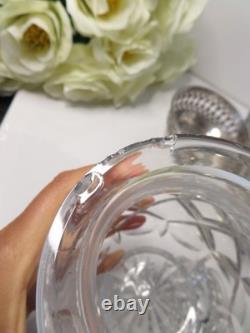
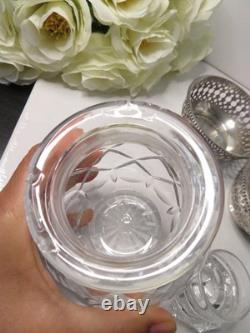
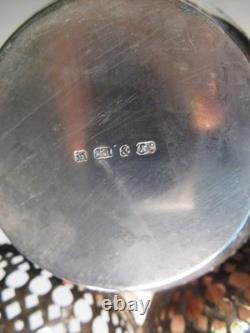
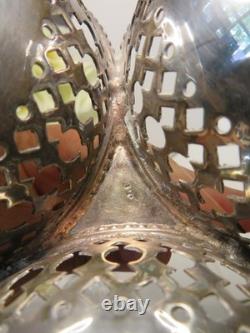
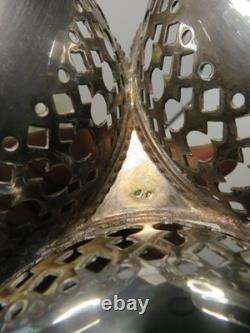
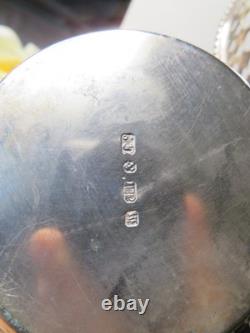
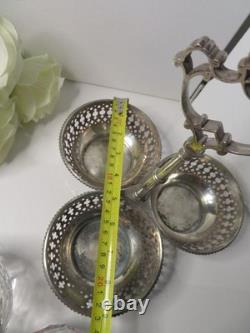
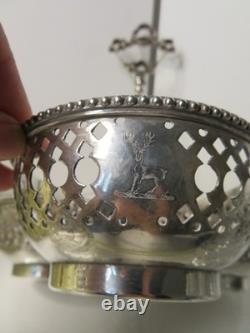
Historical Authenticity & Comprehensive Maker Marks. It is clearly stamped with the renowned gothic hallmark "JD & S", identifying it as an authentic piece by the celebrated Sheffield silversmiths James Deakin & Sons. The absence of the "Ltd" mark strictly dates this beautiful item to the desirable golden decade between 1886 and 1897. Crucially for collectors, the center of the base also bears the stamped initials J. This is an authentic Victorian workman's/silversmith's mark, representing the specific master craftsman who hand-assembled or cast this heavy metal frame within the Sheffield workshop. The Stand: A beautifully crafted, very heavy and substantial metal frame featuring three connected pierced/fretwork gallery holders. The front of the stand is adorned with a prominent and elegant engraved/molded image of a stag (deer), designed in the style of a traditional heraldic coat of arms. It is fitted with a central classic carrying handle. The Jars: Three matching, substantial cut-crystal jars with deep diamond-cut patterns that catch and refract the light beautifully. All jars come with their original, finely faceted matching glass lids/stoppers. Please note the following condition details.Metalwork: The heavy stand is structurally sound and sturdy. It features a wonderful authentic aged patina with some areas of silver-plate wear/bleeding where the base metal shows through, adding great antique character. Glassware: The crystal jars are clean and bright. Two jars are in great antique condition.
One jar has a few noticeable chips on the rim/neck area (please refer carefully to the close-up photos). Please study all the photos carefully as they form the most important part of the description.