
WMF Art Nouveau Silver-Plated Cup Holder with Female Masks, c. 1900-1910
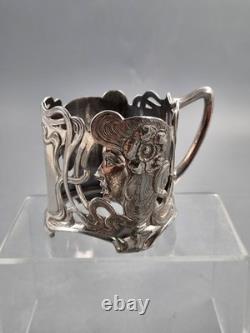
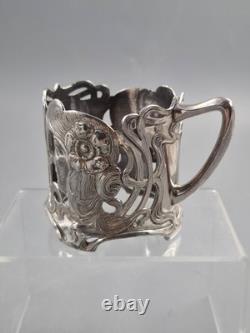
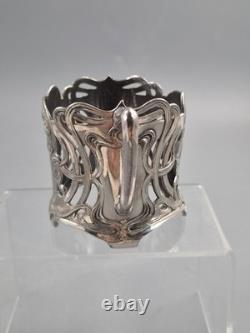
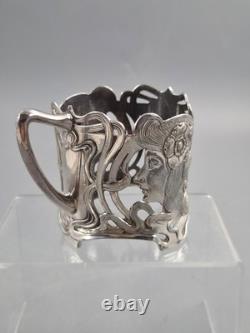
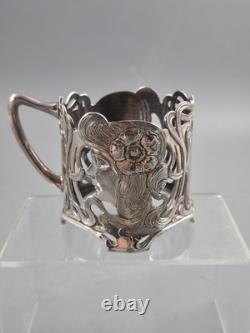
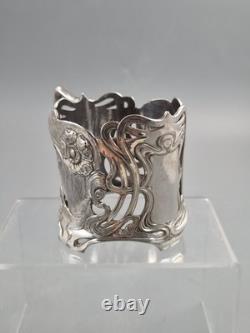
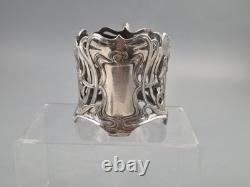
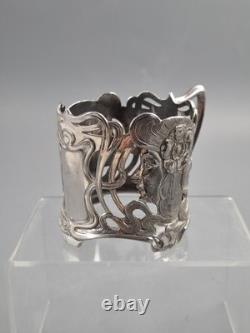
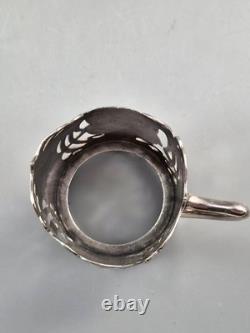
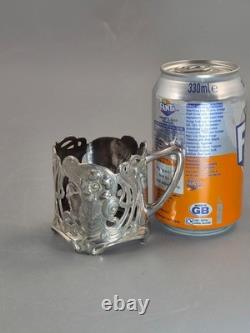

WMF Art Nouveau Silver-Plated Cup Holder with Female Masks, c. Created during the height of the Art Nouveau movement, it combines female masks, flowing hair, floral ornament and elegant openwork construction in one of the distinctive organic designs that made WMF a leading force in European decorative metalwork. The openwork body is centred on a pair of female profile masks framed by flowing whiplash ornament that dissolves into stylised hair and floral motifs. Rather than being applied to the surface, the decoration forms an integral part of the structure itself, creating a fluid and highly sculptural composition in which ornament and form become inseparable. At the centre of the composition is a reserved cartouche framed by flowing Art Nouveau ornament.
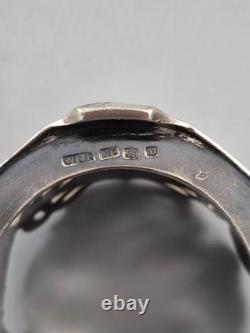
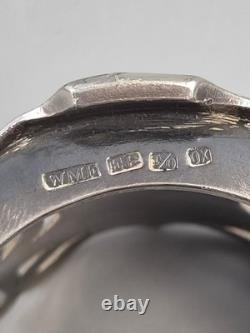
Such panels were often left blank to receive a monogram, family crest or presentation inscription, allowing the owner to personalise the piece while preserving the harmony of the overall design. The underside bears WMF marks together with EP, I/O and OX. EP denotes electro-plated silver, I/O refers to the grade of silver plating, while OX indicates the original oxidised finish intended to enhance the depth of the relief decoration. WMF originated in Geislingen in 1853, when Daniel Straub joined the Schweizer brothers to form Metallwarenfabrik Straub & Schweizer.The company won a gold medal at the London International Exhibition in 1862 and later received further awards at the Paris Exposition of 1900 and the St. Louis World's Fair of 1904. WMF became one of Europe's leading producers of Art Nouveau metalwork and was especially renowned for its high-quality silver-plating technology, which combined industrial innovation with the appearance and refinement of traditional silver craftsmanship. At the turn of the 20th century, tea, coffee and chocolate drinking formed an important part of daily social life throughout Europe.
Decorative cup holders such as this were designed to hold hot glass tumblers while protecting the hand, combining practical use with fashionable table presentation. They became especially popular in cafés, railway dining services and middle-class households, where even everyday objects were expected to reflect contemporary taste. Dimensions: Height 7 cm Width 9.3 cm Depth 6.8 cm Weight 143 g. Please study the accompanying photographs carefully as they form an integral part of this description. If you have any questions, we will be happy to answer them.